
Let’s Actually Figure This Out: What Are Virtual Digital Assets?
If your head is spinning from all the talk about crypto, NFTs, and the blockchain, you’re not alone. It feels like a whole new language has popped up overnight, and it’s easy to feel left out of the conversation. But what if we could cut through all that noise?
At the end of the day, most of this digital revolution comes down to one simple idea. So let’s just sit down and figure out, in plain English, what are virtual digital assets (VDAs). Think of this as your friendly guide to a strange new world.
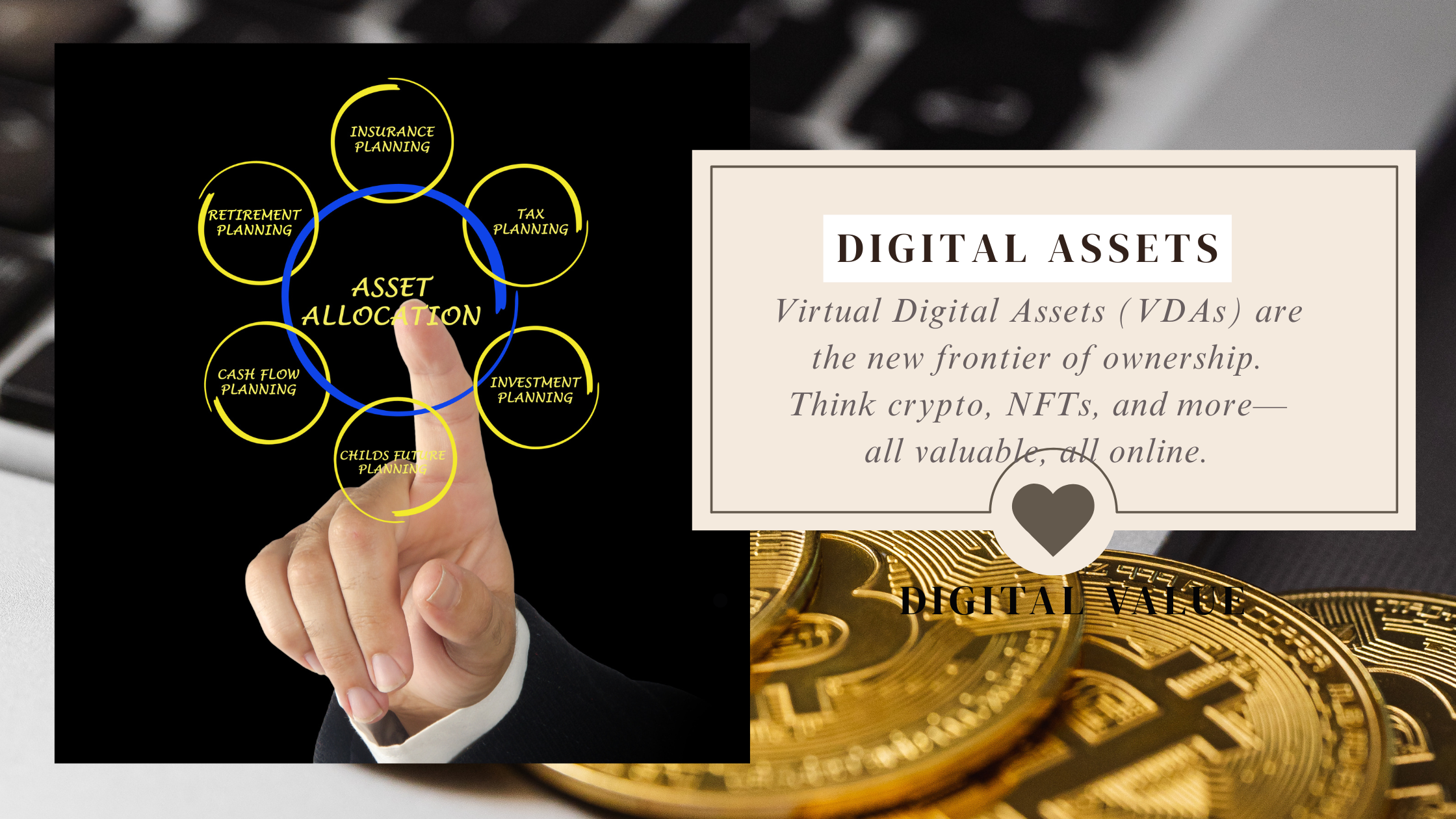
A virtual digital asset is really just any kind of value that exists only in digital form. It’s not a coin you can jingle in your pocket or a stock certificate you can frame. Instead, it’s a string of code, a token, or a number secured by some seriously complex math called cryptography. The Indian government recently gave it an official definition, mostly to figure out how to tax it. This umbrella now covers everything from the big names like Bitcoin to those quirky digital art pieces called NFTs. Basically, if it’s purely digital, has value, and isn’t a traditional currency like the rupee, you’re looking at a VDA. This simple definition really helps answer the question of what are virtual digital assets.

Popping the Hood: The Different Kinds of VDAs
Okay, so you get the big picture. But the VDA world has a lot of different players. To truly understand what are virtual digital assets, you need to know who’s who on the team.
First up is the one everyone’s heard of: cryptocurrencies. These are the digital cash of this new world. Bitcoin, the granddaddy of them all, kicked things off, followed by others like Ethereum. They run on a clever piece of tech called a blockchain. Imagine a public notebook that’s shared across thousands of computers. Anyone can read it, every transaction is recorded forever, and it’s nearly impossible to cheat the system. The best part? No single bank or government controls it. That’s a huge part of the appeal.
But wait, there’s more. This is where the conversation about what are virtual digital assets gets really wild. Ever heard of NFTs (Non-Fungible Tokens)? It sounds complicated, but the idea is simple. “Fungible” just means something is interchangeable. One ₹500 note is the same as any other ₹500 note. “Non-fungible” means it’s a one-of-a-kind original. An NFT is like a digital deed of ownership. It proves you own a unique digital item—be it a piece of art, a clip of music, or even a virtual plot of land. It’s what separates the original from a copy, and it has turned the art world on its head.
Beyond these two, you’ve got a whole ecosystem of other tokens. But the main takeaway is this: VDAs are way more than just funny internet money. They represent a brand new way of owning things.
The Elephant in the Room: Let’s Talk Taxes
Now for the part you’ve been waiting for. Once people get a handle on what are virtual digital assets, their next question is always, “How much does the government take?” India’s stance is crystal clear, and you need to know the rules.
Brace yourself: any profit you make from selling a VDA is hit with a flat 30% tax. No ifs, ands, or buts. And here’s the real kicker—you can’t play games with your profits and losses. If you make a profit on one crypto but take a bath on another, you can’t use that loss to lower your tax bill. The only thing you can subtract from your profit is the price you originally paid for the asset. So, if you buy something for ₹10,000 and sell it for ₹15,000, that ₹5,000 gain is getting a 30% haircut.
On top of that, there’s a 1% Tax Deducted at Source (TDS) on transactions above a certain yearly limit. Think of it as the government’s way of keeping an eye on the money flowing in and out of the VDA market. The buyer or the exchange handles this, but it’s another layer to be aware of. This system makes it clear that understanding your tax liability is a huge part of knowing what are virtual digital assets.
The Good, The Bad, and The Absolutely Crazy
So, is this a train you should jump on? Well, it’s a rollercoaster, not a smooth ride. Let’s look at both sides.
The upside is undeniably exciting. VDAs offer a kind of freedom from the traditional financial system. And yes, there’s the chance for mind-boggling returns. We all love the stories of people who got in early and made a fortune. The underlying technology is also genuinely revolutionary. Understanding what are virtual digital assets is about seeing this potential.
But you have to face the risks head-on. This market is insanely volatile. Prices can swing by huge amounts in a single day. You could literally lose every rupee you put in. Is your stomach strong enough for that? The space is also still a bit of a Wild West, attracting its fair share of scammers and hackers. And since most transactions can’t be reversed, if your assets get stolen, they’re probably gone for good. You have to go in with a healthy dose of caution.
So, Where Is This All Headed?
Is this whole VDA thing just a fad? Probably not. We’re seeing governments around the world, including our own, starting to build rules around it. That regulation could bring some stability and make the market safer for everyone. This is a crucial step in defining what are virtual digital assets for the long term.
The technology itself isn’t standing still either. It’s getting faster, cheaper, and more powerful every year. We’re even starting to see real-world things, like a piece of property or a famous painting, get turned into digital tokens you can buy and sell. Imagine owning a tiny, tradeable slice of a building in Mumbai. That’s the future we’re heading towards. The journey will be messy, but it’s clear that virtual digital assets are changing the game.
In the end, asking “what are virtual digital assets?” opens a door to a new financial reality. It’s an exciting, risky, and rapidly changing world. While the potential rewards are high, the dangers are just as real. Getting educated is your best defense. For more straightforward insights on this digital maze, keep up with resources like the Zero Theories.
Disclaimer: Look, this is just for educational purposes. Don’t take it as financial advice. The market for virtual digital assets is incredibly risky. Seriously. Do your own homework and think about talking to a real financial advisor before you decide to invest your hard-earned money.